
A company is awarded a significant contract. Production requirements for the month increase, but the factory does not suddenly gain flooring space, skilled workers or even hours per daytime. While adding another shift may temporarily help, it could be a source of new work, supervision, training and requirements for quality control.
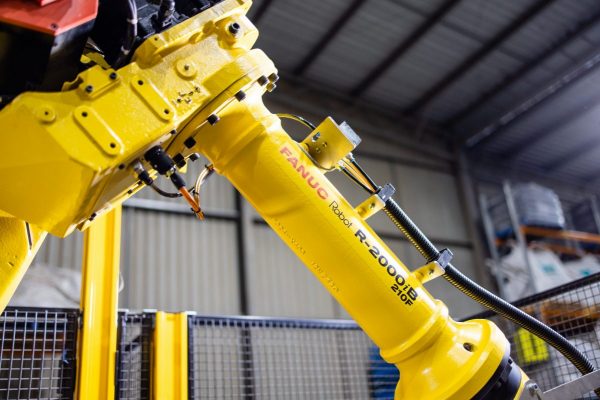
Image credit: automatedsolutions.com.au
This kind of situation reveals the purpose behind robotic automation. Robotics doesn’t just mean replacing humans with machines. A good application could change how manufacturers use their production capacity.
Check out the seconds between products
Inefficient manufacturing is not always obvious. Suppose an operator spends 15 seconds arranging the component after which another 10 seconds are spent applying the material, and a few minutes transferring it to the next step. In the case of a single piece, the difference is insignificant. Repeated thousands of times the seconds are significant production time.
The same applies to wasted material. Same goes of waste materials.
Before making a decision on the equipment they will require, companies looking at robotic automation Australia will benefit from studying the small loss. The analysis by ASA’s experts is designed to uncover problems with quality and bottlenecks as in addition to the waste that can be a problem in a plan.
The robot needs to be able to accommodate the process around it
Robots are just one of many engineering options. It is possible to install tooling, protection and controls sensors as well as conveyers, fixtures electrical integration, and communication to the production equipment already in place. Engineers should consider reach and payload when determining how the robot will move about its area of work and interact with everything around it.
The FANUC approach of ASA’s approach to robot automation includes concept development, system design as well as CAD Simulation and offline Programming. Engineers can investigate system configurations and calculate cycles prior to when the finished system is installed on the factory floor. This is particularly helpful when space is constrained or if new robotics are required to integrate with a production line that is already in place.
It is crucial to have repeatability in painting and dispensing
The ability to control movement is particularly important for certain manufacturing processes. Imagine coating hundreds or even thousands of parts. The final result doesn’t come from completing each component quickly. It is important to control the speed, distance, and movement of each part from beginning to close of the process.
ASA is a team of experts working with paint and dispensing application across various industries, such as aeronautics and automobile. In these environments, industrial robotic automation can provide repeatable programmed movement while also reducing employee exposure to physically demanding or potentially hazardous processes.
A better control of waste materials can also aid in productivity improvement by reducing the amount of unnecessary materials used.
Installing the system is not enough. It is still necessary to have people to maintain it.
Automation does not completely eliminate the requirement for expert manufacturing. The knowledge required to operate, maintain and run the process change.
Employees must be able to detect abnormal behavior and identify issues, and carry out the correct maintenance. Production requirements can also be changed, which means processes and programs may require modification later.
ASA offers training on site covering safety, programming troubleshooting, mechanical and electric maintenance. They also provide servicing and support for checking equipment condition, and addressing wear throughout the system’s lifetime.
Capacity refers to more than the ability to work faster
In Australia, increasing capacity for production does not necessarily mean adding more employees to repetitive jobs or purchasing bigger buildings. Sometimes, the more important question is whether or not the existing manufacturing process could be designed differently.
ASA has been designing and integrating automation solutions since 2002. It supports the manufacturing industry in Australia and international projects. Its approach connects needs analysis with engineering, simulation, FANUC robot integration training, servicing, and maintenance.
Automation for the sake of automation isn’t a goal. A system that is effective should provide manufacturers something tangible in terms of increased reliability that is consistent in quality, more secure methods, less waste or more capacity from the facility it operates.